
Posted By: The American Journal of Human Genetics, AJHG
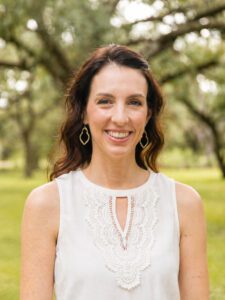
Each month, the editors of The American Journal of Human Genetics interview an author of a recently published paper. This month, we check in with Jennifer to discuss her recent paper, “Ultra-rare functional variants reveal early-onset breast cancer risk genes and pathways in the UK Biobank and All of Us Research program.”
AJHG: What motivated you to start working on this project?
JA: There are several important motivations for this work. First, breast cancer is a prevalent female cancer, affecting approximately one in eight women in the United States. This means we all know someone affected by breast cancer and have witnessed how a diagnosis impacts their lives. Further, our understanding of the genetic risk factors for breast cancer remains incomplete. Even among families where breast cancer impacts multiple first- and second-degree relatives, only a fraction of these individuals carry a mutation in a well-known risk gene like BRCA1, BRCA2, and CHEK2. Addressing this knowledge gap could improve risk assessment for thousands of women.
Second, the creation of biobank populations with exome/genome sequencing and matched electronic health records, such as the UK Biobank and the All of Us Research Program, allows for the analysis of rare variants. Past large-scale genome-wide association studies have successfully identified common breast cancer risk loci with low effect sizes, and these studies have pushed the needle forward with respect to polygenic risk stratification. In contrast, rare variants typically have a larger impact on disease risk but are difficult to identify without population-scale biobanks. Pairing these resources with methods developed in the Lichtarge Lab, algorithms that use Evolutionary Action to identify risk genes and pathways enriched for functionally impactful mutations, provides a unique opportunity to identify novel, high- to moderate-impact breast cancer risk genes from affected individuals.
Altogether, the short-term goal and motivation for this work is to identify risk genes and variants that can be validated by our experimental collaborators. The long-term goal is a more complete understanding of breast cancer risk genetics across ancestry groups.
AJHG: What about the paper/project most excites you?
JA: The UK Biobank and All of Us populations, the participants, are what excite me most about the project. These participants donated their genetic information and shared their medical records to improve the health of others, and it is a privilege to work with these valuable resources. As a scientist, every analysis is meaningful and may potentially yield a new discovery. Even if I have run an algorithm 100 times, maybe I am only changing a single hyperparameter or tweaking the composition of a cohort, I am always eager to analyze the output. It never gets old, ever.
AJHG: Thinking about the bigger picture, what implications do you see from this work for the larger human genetics community?
JA: EA-Pathways, the algorithm highlighted in this project, is broadly applicable. It can and should be applied to other cancers, diseases, and complex phenotypes. The power of EA-Pathways lies in harnessing the statistical properties of the Evolutionary Action variant impact score to bypass the need for matched, healthy controls. This is a particularly useful algorithmic attribute, especially for diseases like cancer, where some non-insignificant portion of the matched control group are often cases-in-waiting.
AJHG: What advice do you have for trainees/young scientists?
JA: The path I took to reach this point in my scientific career was not linear. I transitioned from a bench scientist to a university program administrator, postdoctoral fellow, and computational biologist. When I worked in academic administration, managing undergraduate research programming at the University of Houston, I honed my writing, communication, and program management skills – all of which are critical to being a successful scientist. So, my advice to other trainees and future scientists is to follow your heart, trust your instinct, don’t be afraid to take the road less traveled, and never stop learning or expanding your knowledge base.
AJHG: And for fun, tell us something about your life outside of the lab.
JA: I have two kids, so if I’m not at a little league baseball game watching or coaching a youth volleyball team, I am usually cooking a new recipe or outside enjoying a local park or trail with my family and dog. Like many others, I discovered cooking during the pandemic and haven’t stopped. Cooking is experimental, which is probably why I enjoy it. It gives me the opportunity to be creative and to share my creations with others.
Jennifer Asmussen, PhD, is a computational biologist and Faculty Instructor in the Department of Molecular and Human Genetics at Baylor College of Medicine.