
Posted By: HGG Advances
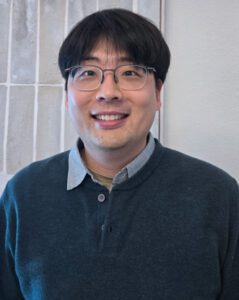
Each month, the editors of Human Genetics and Genomics Advances interview researchers who have published work in the journal. This month, we check in with Hyung-lok Chung (@lokhee7) to discuss his paper “Loss-of-Function Variants in MARK2 Cause Neurodevelopmental Disorder.”
HGGA: What motivated you to start working on this project?
HC: This project came out of an ongoing collaboration with Wendy K. Chung, MD, PhD. We have been working together on a series of neurodevelopmental disease genes—her team handles patient ascertainment and genomic analysis, and our lab contributes Drosophila-based functional genomics. MARK2 was one of several candidate genes in this pipeline, and the early functional data looked good—the variants showed clear phenotypes in our humanized fly models.
While we were in the middle of the project and generating good data, a separate group published a case series of MARK2-associated neurodevelopmental disorder in AJHG. That was a frustrating moment. But I felt that good science doesn’t lose its value just because someone else is working in the same area. Our study was doing something different—systematic, in vivo functional classification of patient-derived variants—which the clinical report did not cover.
So we moved on and finished what we started. Yunseon Yang, PhD, and Yoon-Kyung Shim put in a lot of work on the Drosophila side, and Dr. Wendy Chung wisely guided the project throughout. Looking back, I think the paper turned out well, and the experience was a good reminder that solid functional work will find its place.
HGGA: What about this paper/project most excites you?
HC: The part I find most satisfying is that we didn’t just confirm that MARK2 variants are damaging—we were able to build a functional classification. By testing eight neurodevelopmental disorder (NDD) linked variants in vivo, we could sort them into distinct categories: loss-of-function for truncating variants, hypomorphic for most missense variants, and not pathogenic for one variant that behaved like wild-type. That level of resolution is useful for clinical interpretation.
I also think this study is a good demonstration of what Drosophila can do as a scalable platform for variant analysis. Each variant was tested across multiple tissue-specific assays—viability, lifespan, protein expression, and wing patterning—so we got a fairly comprehensive functional picture. The same approach can be applied to other candidate disease genes, and I hope it serves as a useful template for working through the growing backlog of variants of uncertain significance.
HGGA: What do you hope the impact of this work will be for the human genetics community?
HC: Practically, I hope this provides some clarity for families with MARK2 variants. A genetic diagnosis is the first step, but understanding what a variant actually does to protein function and brain development is what helps clinicians counsel families and think about next steps.
More broadly, I hope it adds to the case for model organism-based functional genomics. Sequencing technology keeps getting faster, and we are identifying variants much more quickly than we can interpret them. Drosophila can be a practical bridge between genetic discovery and functional validation.
And I hope this helps establish MARK2 as a reasonably well-characterized NDD-associated gene, so that future cases can be interpreted with more confidence. Our classification framework may also be useful for guiding ACMG/AMP criteria for MARK2 variants going forward.
On a related note, beginning this year, I have been operating the Houston Methodist Drosophila Functional Genomics Core, which offers functional validation services tailored to clinician-scientists and human geneticists. If you have variants of uncertain significance and are unsure how to begin functional studies, feel free to reach out—I am happy to discuss options. My email is [email protected].
HGGA: What are some of the biggest challenges you’ve faced as a young scientist?
HC: The transition from postdoc to independent investigator has been challenging. Securing grant funding as a new PI takes a lot of effort—writing proposals, going through study sections, dealing with rejections, all while trying to build a lab at the same time. No one really prepares you for how much that takes out of you.
Balancing administrative work with actual science is another ongoing challenge. Budgets, compliance, reporting, mentoring—these things add up quickly and can crowd out the time you need to think about new ideas. I am still figuring out how to protect that time.
And then there is the question of focus. Our lab has several directions we find interesting—sphingolipid metabolism, Epstein-Barr virus, and neurodegeneration, rare disease gene discovery—and each could easily take up a whole career. With limited funding and resources, choosing what to pursue and what to set aside for now is something I think about a lot. Saying “not yet” to a good idea is sometimes just as important as saying “yes” to the right one.
That said, I have been fortunate with my institutional environment. Without the support of Houston Methodist Research Institute and the Department of Neurology, my lab setup would probably still not be finished. Their infrastructure and commitment to supporting new investigators have made a real difference, and I am grateful for that. It has allowed me to spend more time on the science itself.
HGGA: And for fun, what is one of the most fascinating things in genetics you’ve learned about in the past year or so?
HC: I have been following the recent large-scale whole-genome sequencing studies that are identifying risk genes for common neurodegenerative diseases. For a long time, what we knew about conditions like multiple sclerosis, Alzheimer’s disease, and Parkinson’s disease was mostly limited to genome-wide association study hits in non-coding regions, which made it hard to pin down the actual genes and mechanisms.
Now, with population-scale whole-genome sequencing, researchers are finding rare coding variants that carry real risk for these common diseases, which starts to connect the rare and common disease worlds that have mostly been separate. For me, this is interesting because it means the functional genomics approaches we use for rare Mendelian disorders could also be applied to more common conditions.
It is a good time to be in this field—the tools and data are finally catching up to the questions we have been asking for years.
Hyung-lok Chung, PhD, is an Assistant Professor at Houston Methodist Research Institute and Weill Cornell Medical College.