
Posted By: The American Journal of Human Genetics, AJHG
Each month, the editors of The American Journal of Human Genetics interview an author of a recently published paper. This month, we check in with Julia to discuss her recent paper “Integrating clinical diagnostics with interventional genetics for neurodevelopmental disorders.”
AJHG: What motivated you to start working on this project?
JM: I’m really interested in the field of interventional genetics and the idea that, by understanding the genetic variant underlying a disease, we can begin to develop therapeutic interventions!
AJHG: What about the paper/project most excites you?
JM: In the paper, we present a cohort of 81 individuals with neurodevelopmental disorders for which we collected genetic and phenotypic information and then generated and biobanked stem cells. Many genetic neurodevelopmental disorders are caused by rare single-gene variants or chromosomal rearrangements, making the individual disease relatively uncommon. For that reason, it feels especially fulfilling to have assembled this cohort as a potential resource for the rare disease community.
AJHG: Thinking about the bigger picture, what implications do you see from this work for the larger human genetics community?
JM: I hope that through this work we highlight the power of using genetic information and how a genetic diagnosis can be leveraged to inform therapeutic development. Beyond that, I hope we demonstrate the feasibility of implementing the pipeline we present, which spans clinical diagnostics, the biobanking of patient-derived cells, and interventional genetics screening. Ultimately, this work provides a potential roadmap for clinical centers interested in developing a similar platform.
AJHG: What advice do you have for trainees/young scientists?
JM: Since I am still a trainee, my advice stems from what I have tried to implement throughout my academic journey: stay curious about the science, don’t shy away from challenge, and read. Building your knowledge of a topic will help the design of well-informed experiments.
AJHG: And for fun, tell us something about your life outside of the lab.
JM: I love outdoor sports – especially hiking, skiing, and rowing! One of my favorite hiking memories is completing part of the Kungsleden trail, which winds through the Arctic tundra of northern Sweden.
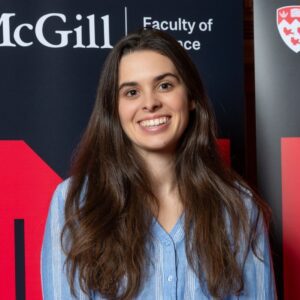
Julia Macintosh is a PhD candidate in the Integrated Program in Neuroscience at McGill University.