
Posted By: HGG Advances
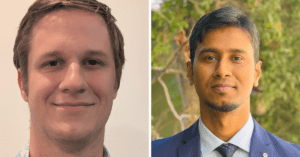
Each month, the editors of Human Genetics and Genomics Advances interview researchers who have published work in the journal. This month, we check in with Joshua Hack and Mohammad Nazim to discuss their paper “Gene-specific pathogenicity predictor for chromatin remodeling BAF complex-associated neurodevelopmental disorders.“
HGGA: What motivated you to start working on this project?
Authors: We came across the study by Valencia et al. that provided the neurodevelopmental disorder (NDD)-associated variants we used in our study. In that paper, it was shown that mutations causing neurodevelopmental disorders were most enriched in the chromatin-remodeling BAF complex, which Nazim had previously studied. When Joshua joined the lab, he came from a rare-disease background in pediatric epilepsies and had a wealth of experience building machine learning predictors. Given how prominent these BAF complex–related NDDs are, we investigated how effective different predictors were in classifying variants as pathogenic or benign, ultimately finding that these tools were less effective at classifying these rare and ultra-rare variants, mostly because these variants and genes were poorly represented in the training sets. With this in mind, we set out to construct a high-performing machine learning tool to predict BAF complex variants (BAF-Wald), with the primary goal of defining a simple protocol for designing a gene-specific pathogenicity predictor using tools already on the market with a few extra features.
HGGA: What about this paper/project most excites you?
Authors: We are most excited about the ability to expand our model to include more genes. While it is currently trained on 13 subunits of the BAF complex, we show in our study that it is simple to expand the number of genes the model is trained on without decreasing its overall performance. This means that BAF-Wald can easily expand to include genes from other complexes and pathways associated with NDDs or other rare diseases with minimal data input. We also appreciate the convergence of clinical, biochemical, and evolutionary approaches to build BAF-Wald, making the model capable of informed decision-making across different lines of evidence.
HGGA: What do you hope the impact of this work will be for the human genetics community?
Authors: We hope this work will be taken as an effective workflow for rapidly developing gene-specific pathogenicity predictors. While the genome-wide tools that currently exist are a substantial boon to the human genetics community, they generally underperform on genes that are poorly represented in research. Our work allows rare disease researchers and communities to develop gene-specific tools that can help improve diagnostics for underserved clinical communities, and over time, these tools can be merged until what is currently BAF-Wald covers the genome.
HGGA: What are some of the biggest challenges you’ve faced as a young scientist?
Joshua: One of the biggest challenges I have faced is adapting to new fields and disciplines. Moving from rare pediatric epilepsies into a new role pursuing basic biochemical research has been a great challenge, further increased by shifting from computational research to more bench work. It’s a challenge that is rewarded by being able to continue working in rare disease spaces with Nazim as a collaborator and pursuing the translation of my basic research into clinical applications.
HGGA: And for fun, what is one of the most fascinating things in genetics you’ve learned about in the past year or so?
Nazim: One of the most fascinating developments I’ve encountered recently is the growing understanding of the complexity and plasticity of alternative splicing in human tissues. Over the past year, studies leveraging long-read RNA-seq and single-cell transcriptomics have revealed that many genes produce an astonishing diversity of isoforms, often in highly cell-type- or context-specific manners. What’s striking is how these splicing programs are dynamically regulated by RNA-binding proteins and cis-regulatory elements, sometimes in response to subtle environmental or developmental cues. It’s a powerful reminder that the functional output of the human genome is far more versatile and nuanced than the linear gene model suggests.
Mohammad Nazim, PhD, is an Assistant Professor of Biochemistry in the School of Medicine at Case Western Reserve University. Joshua Hack is a graduate student at the UCLA David Geffen School of Medicine.