
Posted By: HGG Advances
Each month, the editors of Human Genetics and Genomics Advances interview researchers who have published work in the journal. This month, we check in with Steven Gazal to discuss his paper “Evaluating genetic ancestry inference from single-cell transcriptomic datasets.”
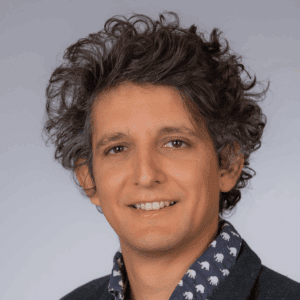
HGGA: What motivated you to start working on this project?
SG: I’ve been very interested in understanding differences in gene regulation across human populations and how genetic ancestry shapes gene expression. However, when I started thinking seriously about studying these questions at the cell-type resolution, I realized that multi-ancestry single-cell datasets were limited or often unavailable. That led me to wonder whether we could recover ancestry information directly from single-cell RNA-seq data.
HGGA: What about this paper/project most excites you?
SG: I’m always drawn to projects at the intersection of population genetics and functional genomics. What excites me most is that it brings population-genetic thinking into single-cell genomics and allows us to move beyond speculating about the lack of representation in the field by quantifying it. By making ancestry measurable in existing single-cell datasets, we create a practical foundation for studying regulatory differences across populations and for evaluating how representative our current resources truly are. I’m excited by the idea that this framework can help shape future studies to be more inclusive and biologically informative.
HGGA: What do you hope the impact of this work will be for the human genetics community?
SG: I hope this work encourages researchers to routinely report the genetic-ancestry of all samples in single-cell studies. Ancestry is an important source of biological variation, and making it transparent strengthens interpretation and reproducibility. I also hope it motivates the design of future studies that include more diverse populations. At present, many single-cell datasets are predominantly of European ancestry, except for a few large East Asian cohorts. Broadening representation will be essential for building a more complete and equitable understanding of human gene regulation.
HGGA: What are some of the biggest challenges you’ve faced as a young scientist?
SG: One ongoing challenge throughout my career has been learning to set boundaries between personal and professional life. Research is intellectually exciting, but it’s also something that stays with you as unfinished questions are always at the back of your mind. Since there’s rarely anything explicitly preventing you from working, learning how to protect time for family and personal life has been important and sometimes difficult. Over time, I’ve realized that one practical solution is to be quite strict about protecting dedicated personal time.
HGGA: And for fun, what is one of the most fascinating things in genetics you’ve learned about in the past year or so?
SG: I’ve been especially excited by the emergence of population-scale multiome datasets, such as TenK10K and FinnGen. When we started this project about five years ago, single-cell RNA-seq datasets were relatively small. It’s fascinating to see how quickly the field has evolved, from modest single-cell studies to population-scale multimodal resources. It feels like we’re entering an era where population genetics and functional genomics are becoming deeply integrated at scale, creating new opportunities to interpret genome-wide association study results by linking genetic associations to specific cell types and precise regulatory mechanisms.
Steven Gazal is an assistant professor at the Center for Genetic Epidemiology in the Department of Population and Public Health Sciences at the University of Southern California Keck School of Medicine.