
Posted By: HGG Advances
Each month, the editors of Human Genetics and Genomics Advances interview researchers who have published work in the journal. This month, we check in with Zhengyang Yu, Li Charlie Xia, and Kaida Ning to discuss their paper “Multi-trait genome-wide analysis identified risk loci and candidate drugs for heart failure.”
HGGA: What motivated you to start working on this project?
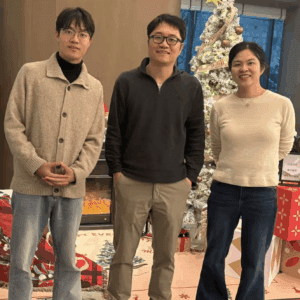
Authors: Heart failure is common and deadly, but its genetics are hard to nail down because it’s highly polygenic, and many genome-wide association study signals haven’t been translated into actionable biology or treatment ideas. We were motivated by the strong genetic overlap between coronary artery disease (CAD), heart failure (HF), and the opportunity to use multi-trait methods (e.g., Multi-Trait Analysis of GWAS [MTAG]) to increase discovery power and then systematically connect loci → genes → potential drug candidates.
HGGA: What about this paper/project most excites you?
Authors: Two things excited us. The first is the boost in discovery and replication. Using MTAG, we identified 72 HF loci, with 58 supported in replication, which is a meaningful step beyond “yet another HF GWAS hit list.” The second is the end-to-end pipeline. We didn’t stop at SNPs—we integrated transcriptome-wide association study (TWAS) (215 risk genes, including EDNRA and FURIN), pathway enrichment, single-cell enrichment in cardiac-related cell types, and then a drug-repurposing step (81 candidate drugs) to move closer to therapeutic hypotheses.
HGGA: What do you hope the impact of this work will be for the human genetics community?
Authors: We hope the main impact is practical: a stronger set of HF-associated loci and prioritized genes, plus biologically grounded annotations that make it easier for others to design follow-up experiments and evaluate therapeutic opportunities.
HGGA: What are some of the biggest challenges you’ve faced as a young scientist?
Authors: Speaking generally (and consistent with what this project required): Bridging disciplines without losing anyone. A lot of the work sits at the intersection of statistical genetics and biology, including translating results from Linkage Disequilibrium Score Regression-LDSC/MTAG/TWAS into mechanisms (pathways, the right cell types in single-cell data) and then taking one more step toward translation—such as prioritizing targets or considering drug repurposing.
HGGA: And for fun, what is one of the most fascinating things in genetics you’ve learned about in the past year or so?
Authors: Telomere length is “reset” in the first days after fertilization. A recent study shows that proper mitochondrial-nuclear communication established at fertilization regulates efficient telomere elongation during preimplantation development.
Zhengyang Yu and Li Charlie Xia, PhD, are in the Department of Statistics and Financial Mathematics in the School of Mathematics at South China University of Technology. Kaida Ning, PhD, is a senior data scientist at the Peng Cheng Laboratory in Shenzen, China.