
Posted By: The American Journal of Human Genetics, AJHG
Each month, the editors of The American Journal of Human Genetics interview an author of a recently published paper. This month, we check in with Wenhan (X: @lu_wenhan; BlueSky: @wenhanl.bsky.social) to discuss her recent paper “Effect heterogeneity reveals complex pleiotropic effects of rare coding variants.”
AJHG: What motivated you to start working on this project?
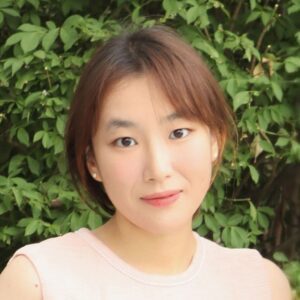
WL: I started working on this project in 2021, shortly after finishing my master’s in Biostatistics at Yale. At the time, large-scale phenome-wide rare-variant association results from biobanks were just starting to emerge, giving us a new opportunity to study how rare variants influence multiple traits. With my background in mathematics and statistics, I’ve always been fascinated by the idea of developing statistical methods to tackle real biological questions like this and learn more about human biology from these massive datasets.
AJHG: What about the paper/project most excites you?
WL: Pleiotropy has been studied quite extensively through common variants, but rare coding variants offer a different, and potentially complementary, way of looking at it. What I find most exciting is that ALLSPICE lets us look beyond gene-level associations and uncover how different rare variants within the same gene can have different effects across traits, using just association summary statistics. Seeing these patterns connect to potential protein-level functions, especially how variants in ALB relate to calcium-binding regions, was really satisfying!
AJHG: Thinking about the bigger picture, what implications do you see from this work for the larger human genetics community?
WL: Over the years of working on ALLSPICE, I also got involved in large-scale GWAS and RVAS across thousands of phenotypes in All of Us. These experiences have really made me appreciate how much we can learn from large genetic datasets. As more biobanks and sequencing data become available, I think understanding pleiotropy will become more and more important. It can help us connect evidence across different traits and diseases and better understand where their underlying biological mechanisms overlap and where they differ.
AJHG: What advice do you have for trainees/young scientists?
WL: One thing I learned from my principal investigator is the importance of recognizing the scope of what you don’t know. Some things you don’t know but others do, while others remain unanswered by the entire field. Knowing the difference helps put uncertainty into perspective. I’ve also found that simply taking the first step often helps ease the anxiety of not knowing.
AJHG: And for fun, tell us something about your life outside of the lab.
WL: I have a Duolingo streak of over 1,500 days! I enjoy it as a fun activity to keep my brain fresh in a different way every day, but at this point, I’m also just too afraid to lose my streak!
Wenhan Lu, MS, is a Computational Associate at the Broad Institute.