Inside HGGA - Page 5 of 6 - ASHG

Inside HGGA

Sofia Papadimitriou is an F.R.S.-FNRS postdoctoral researcher at the Université Libre de Bruxelles, Brussels, Belgium and Ghent University, Ghent, Belgium.

Inside HGG Advances: A Chat with Sofia Papadimitriou

Posted By: HGG Advances  HGGA: What motivated you to start working on this project?   SP: I always had an interest in the field of medical genetics, and oligogenic diseases specifically intrigue me because of their challenging nature, as even after years of research since their first official reporting in the early 1990s, our knowledge on... Read More
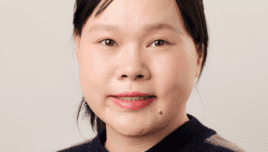
Jingjing Yang, PhD is an Assistant Professor in the Departments of Human Genetics at the Emory University School of Medicine and Biostatistics and Bioinformatics at the Rollins School of Public Health.

Inside HGG Advances: A Chat with Jingjing Yang

Posted By: HGG Advances HGGA: What motivated you to start working on this project?   JY: This project was motivated by my previous work about developing a Bayesian Functional GWAS (BFGWAS) method to account for non-overlapped categorical functional annotation for multivariate GWAS. Our previous work of the initial BFGWAS method has shown the advantages of accounting... Read More

Jundong Liu recently earned his PhD at City University of Hong Kong.

Inside HGG Advances: A Chat with Jundong Liu

Posted By: HGG Advances HGGA: What motivated you to start working on this project?   JL: Numerous studies suggest red blood cell distribution width (RCDW) and mean corpuscular volume (MCV) are associated with known risk factors for hemorrhagic stroke. However, prior to our study, no causal link had been seen between these blood cell traits and... Read More

Souhrid Mukherjee, PhD

Inside HGG Advances: A Chat with Souhrid Mukherjee

Posted By: HGG Advances HGGA: What motivated you to start working on this project?   SM: Working with the Vanderbilt University Undiagnosed Diseases Network (UDN) team during my PhD demonstrated the critical need for better approaches to variant interpretation in rare diseases. And even after a candidate gene and variant are identified, I observed that the... Read More