
Human Genetics Scholars
2026-2028 Human Genetics Scholars

Alexis Garofalo, BS is a PhD candidate in Genomics and Computational Biology at the University of Pennsylvania in Philadelphia. Her research integrates rare germline variant discovery in hepatocellular carcinoma across major biobanks with international collaborations spanning South America and Africa, and AI-derived CT phenotypes to uncover sex-specific genetic architecture of hepatic fat. Beyond research, she is deeply committed to science education and mentorship. She is the recipient of her graduate group’s Student Leadership and Engagement Award and serves as Outreach Co-Chair for the Ernest E. Just Biomedical Society, where she leads hands-on wet and dry lab experiences for Philadelphia middle and high school students, from bench experiments to coding projects. She serves on PhD career panels and has reached Spanish-speaking audiences through Hablemos Ciencia. Through these experiences, she strives to build networks that empower students from varied backgrounds to pursue careers in genomics and improve representation of underrepresented populations in biomedical research.

Montana Kay Lara, PhD, is a Postdoctoral Scholar at the University of California San Diego. Her research focuses on the genetics and neurodevelopment of neuropsychiatric disorders. She studies behaviors related to substance use disorders in model systems and ultimately aims to uncover genetic drivers of human disease. She has conducted genome-wide association studies on complex behaviors using a model rat system and is currently investigating neurodevelopmental mechanisms influencing risk and resilience to addiction-related behaviors using cell-type-specific transcriptomics in the developing brain. She is a first-generation scientist who fiercely advocates for increased access to research for underrepresented individuals. Working at the intersection of basic, translational, and human disease research, she recognizes the importance of connecting scientific discovery to public policy and has led efforts that communicate the critical role of sustained research funding to representatives and policymakers. She is committed to advancing human health through science and advocacy.

Deanne Nixie Miao, BSc, is a PhD candidate in the Department of Biochemistry and Medical Genetics at the University of Manitoba in Winnipeg, Canada, under the supervision of Britt Drögemöller, PhD. Her research focuses on understanding the biological mechanisms underlying cisplatin-induced ototoxicity (CIO). using cutting-edge technologies, such as single-nuclei RNA-sequencing (snRNA-seq) and single-nuclei ATAC sequencing (snATAC-seq). Her work aims to leverage these approaches to develop strategies for the prevention of CIO, and the prediction of individuals that are highly susceptible to developing this adverse drug reaction. Beyond her research, Nixie is actively involved in student leadership, mentorship and community engagement through organizations such as the Health Sciences Graduate Students’ Association (HSGSA), Filipinos Advancing Research in Health Sciences (FLARES), and Co-mentorship of Patients, Investigators, and Learners in Oncology Training (Co-PILOT).

Chynna Smith, MS, is an MD, PhD candidate in the Medical Scientist Training Program at Albert Einstein College of Medicine in New York, originally connected to the Bronx community where her mother’s family is from. Her research integrates deep learning and population genetics with functional stem cell models to uncover how non-coding genetic variants govern osteoblast differentiation and contribute to osteoporosis risk. With a long-term goal of leading an independent research program investigating the genetics of dermatologic diseases that disproportionately affect minority populations, she is committed to ensuring that genomic research reflects the diversity of the communities it aims to serve. This commitment extends beyond the bench, where she serves as Co-Chair of the Student National Medical Association (SNMA) Physician Researcher Initiative, mentors students participating in pathway programs for underrepresented groups in biomedical research, and was recognized with the Karen Tong Student Service Award for her dedication to the graduate school and local community.
2025-2027 Human Genetics Scholars

Carmina Barberena-Jonas, MSc, Cinvestav Carmina Barberena-Jonas, originally from Aguascalientes, is a passionate scientist whose work focuses on exploring biological, evolutionary, and medical questions through computational and statistical methods in population genetics. She has a B.Sc. in Genomic Sciences from Universidad Nacional Autónoma de México (UNAM) and is currently pursuing her PhD at Cinvestav, Mexico, under the mentorship of Prof. Andrés Moreno-Estrada. She is dedicated to science outreach and community engagement, working to make genomic knowledge accessible to underrepresented groups. Her efforts include developing MexVar, a public web application to share data from the Mexican Biobank, and leading workshops and training programs aimed atmarginalized communities with limited access to genomic resources. Through fieldwork across Mexico and Latin America, she has also engaged directly with Indigenous communities, ensuring ethical communication, informed consent, and the return of results in culturally respectful ways.

Cal Liao, PhD, The Broad Institute of MIT and Harvard Cal Liao is a postdoctoral researcher at the Broad Institute and Massachusetts General Hospital, specializing in statistical genetics and psychiatric genomics. His research focuses on understanding genetic convergence across schizophrenia and bipolar disorder, integrating rare variant, polygenic, and transcriptomic analyses across diverse global populations. Cal is currently leading large-scale efforts in the Bipolar Exome (BipEx) Consortium, with ongoing collaborations across Australia, Asia, Africa, and South America. Cal earned his PhD from McGill University, where he led consortia-based studies of neurological and psychiatric disorders. A committed advocate for inclusive research, Cal is working to advance representation of underrepresented populations in genetic studies and to promote equitable approaches in precision psychiatry.
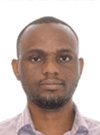
Oyesola Ojewunmi, PhD, Queen Mary University of London Oyesola Ojewunmi obtained a PhD in biochemistry from the University of Lagos, Nigeria, and is currently a Senior Research Fellow in Genomics at the Precision Healthcare University Research Institute, Queen Mary University of London, UK. His research applies advanced statistical methods to address genetic heterogeneity in genome-wide association meta-analyses and fine-mapping, with a focus on chronic kidney disease in people of African ancestry. He also works on sickle cell disease (SCD), investigating genotype-phenotype correlations by integrating multi-omics datasets to uncover biologically and clinically relevant markers and pathways. Having witnessed the profound impact of SCD on families and communities, Oyesola is deeply motivated to contribute to this field. In his previous postdoctoral position at King’s College London, UK, he led the first genome-wide association study of foetal haemoglobin in Nigerian patients with SCD. He is passionate about enhancing the capacity of young African scientists in genomics.

Wilfredo Gabriel Gonzalez Rivera, PhD candidate, University of California, San Diego Wilfredo is a first-generation, low-income PhD candidate from Vega Baja, Puerto Rico, in the Biomedical Informatics program at University of California, San Diego. He earned two bachelor’s degrees in computer science and biotechnology from the University of Puerto Rico at Mayagüez. His research combines genetics, genomics, and social science to understand the underlying source of health disparities, especially among admixed individuals in genetic studies. As a Puerto Rican, he’s committed to improving how we study complex traits in admixed populations, often mischaracterized by oversimplified population descriptors, which have complicated their analysis in genetic studies. His goal is to improve the clinical utility of genetics in admixed populations, leading to a more inclusive, accurate, and impactful healthcare for all. Wilfredo is a leader in the Biomedical Informatics field, having won prestigious awards such as the Sloan fellowship, the ARCS fellowship, the NIH-T15 fellowship, and recognized as UCSD’s Biomedical Informatics Trainee of the Year in 2024.